



The software industry is known for being innovative. But what should we think of automated layout software?
Some software solutions become widely adopted while others remain in the shadows—intentionally or not. Their diversity is astonishing; they touch every industry and impact every activity they address.
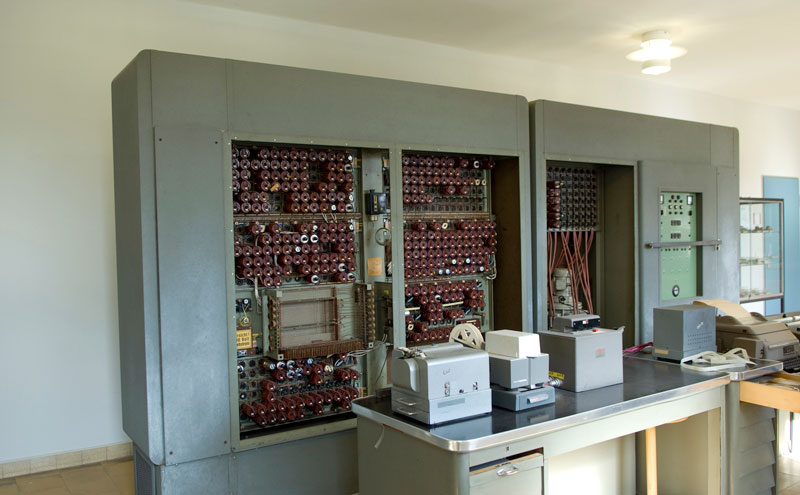
An example? In the 1970s, some computer scientists believed they needed only a few years to build translation tools. Three years later, after better understanding the complexity of languages, they revised their estimate to 10 years. In reality, it took 50 years and the advent of neural networks (artificial intelligence) for translation tools to become credible.
Those decades helped us understand that language is an abstraction built on experience, knowledge, emotions, etc. Not easy to model! This history of machine translation illustrates this evolution.
And what about automated layout? The parallels with machine translation are numerous. Is it a major or minor topic? When does it become a real issue? Can an automated layout engine approximate human work? How do you model a graphic composition, a design intent, the data to be used, etc.? Especially when media formats (print, web, screens, smartphones, posters, digital labels, etc.) keep evolving?
On innovation
In theory, we speak of innovation when dealing with a field where there is a gap between the state of the art (the sum of human knowledge in that domain) and the goal being pursued or studied. Incidentally, this requires knowing the state of the art, a daunting task: human knowledge is vast, and each field, however specialized, demands real effort to master. How did we manage before the knowledge-sharing enabled by the web?
In practice, each of us relies on our own knowledge to assess the gap with the intended result. Do I have the expertise needed to design a high-performance car engine? Personally, I know enough to say no! And what about a smartphone built with billions of transistors?
Intuitively, we understand that innovation is a truly complex process, and very often, the work of a team. Even though solitary inventors like Nikola Tesla existed, the vast majority of innovations, including software, are the outcome of multidisciplinary collaboration. Processor specialists use tools that emulate circuits of 11 billion components (!), material scientists design and produce the tactile glass of our smartphones, software architects build iOS and Android, etc. And what about medicine, astrophysics, and every other field?
Faced with such abundance, some bodies describe what constitutes innovative and research processes (OECD, Frascati Manual), others record innovations as patents (BNF), and others publish them with a “peer review” score (scientific publications).
We are all innovators.
Everyone has innovated at some point, individually or collectively, to solve a problem, even if it wasn’t documented. We must distinguish “local innovation” (gap between my own knowledge and the solution, usually unpublished) from “global innovation” (gap between the state of the art and the solution, generally published).
About automated layout software and much more
So, is software innovative simply because it exists?
Developing software requires knowledge: you don’t start from scratch. Instead, you rely on a vast set of tools (languages, databases, networks, AI, OS, cloud, CI/CD, libraries, etc.), many of which are open source. They evolve, interoperate, and are not always simple. Most require skills and learning, like a programming language or an operating system whose subtleties take years to master.
Therefore, the alignment between the tools chosen and the intended result will impact teams positively or negatively, and this can become strategic. Investing in tools destined to disappear can be costly. But how do you choose the right tools? Must you know them all to make the best choice? Ask an AI? Trust specialized media? No matter what, experience and knowledge are essential.
Beyond tools lies the question of domain expertise: is it conceivable to develop accounting software without solid accounting expertise? The same applies to the concept of automated layout software.
One must not only understand the domain but also what new contribution one wants to bring to it: competing solutions often exist, and you must introduce innovative paradigms to justify the investment represented by software development. Again, knowledge (local and global) must be related to the solution being pursued.
Then comes the software itself: an architecture made of interdependent concepts that will greatly influence the automated layout software’s ability to achieve its objectives and its capacity to evolve. Do you remember the first version of Excel and what it is today? I doubt even a single line of the original code remains! A software’s ability to evolve is one of its essential characteristics, even if invisible to the user.
Beyond internal clarity, software can perform tasks with impressive speed or with exasperating slowness. It can have an elegant, intuitive interface—or a confusing one. It can be stable or unstable, pleasant or frustrating to use. It can even attempt to anticipate your needs, with varying degrees of success. All these aspects require knowledge and innovation, both technical and ergonomic.
Automated layout software and Artificial Intelligence?
We won’t delve into the inner workings of automated layout: it’s a complex topic regularly covered on chez-j2s. But since we’re talking about innovation, let’s focus on the essence of the engine known as “Module Editor” , which relies… on a language.
This language is one of the innovations developed by J2S, enabling the modeling (= describing) of what is expected from a process that ingests data and initial conditions on one side, and outputs graphical shapes arranged according to contextual rules. There was an initial innovation (the first version, born from the expertise and experience of its designers) and many subsequent innovations (through accumulated experiences and ideas). Used for years in vastly different graphic environments, one might imagine Module Editor has little room to evolve.
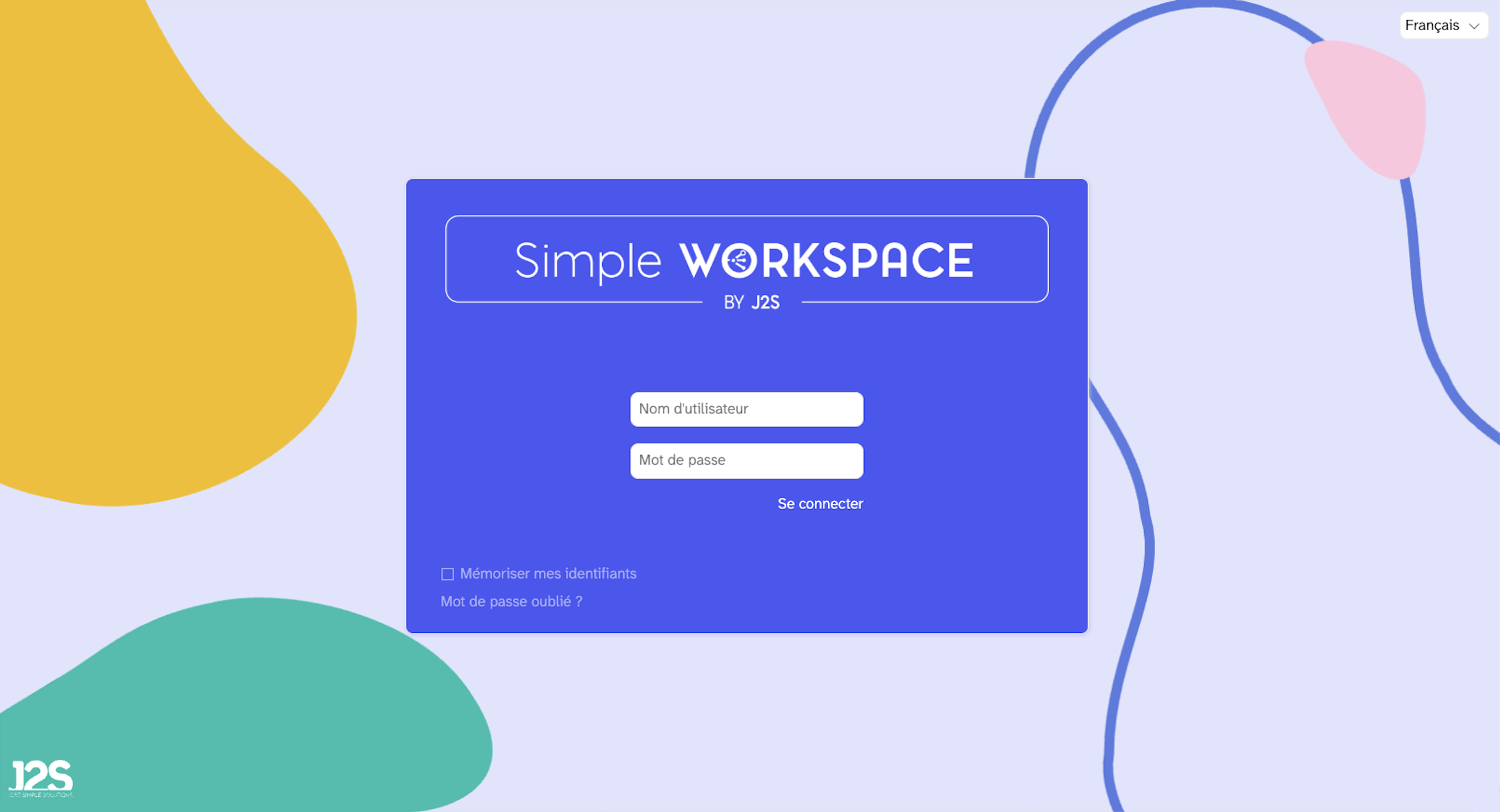
A wrong assumption! The R&D team regularly challenges this key component of Simple Workspace, and has been studying how recent AI advances could enhance its flexibility. Revolution or evolution? One certainty: surprising new possibilities.
This work is part of a broader effort that makes Simple Workspace—our production platform with automated layout capability (and far more!)—a modern solution used for many years by an ever-growing number of clients.
Want to learn more or see a live demo?
Get in touch
with us, we’ll be happy to talk.
FAQ
What is automated layout software?
A tool that automatically generates documents (catalogs, brochures, product sheets…) from structured data, without manual layout work.
Why use automated layout software rather than traditional manual layout?
It saves time, ensures graphic consistency, reduces errors, and facilitates collaboration between marketing teams, graphic studios, and partners.
Can automated layout software replace a graphic designer?
No. It automates repetitive and technical tasks, but creativity, design intent, and adaptation remain the domain of designers and layout artists.
What types of documents can be created with automated layout software?
Product catalogs, technical sheets, multilingual brochures, magazines, marketing documents, and any output requiring large-scale production.
Is automated layout software compatible with Adobe InDesign?
Yes. In the case of Simple Workspace, it relies on InDesign Server to generate faithful, production-ready, automated pages directly from your data.
How does automated layout software integrate AI?
AI can suggest layouts, anticipate constraints, or propose translations.
Can automated layout software handle multiple languages and markets?
Yes. It can generate multilingual documents from PIM/DAM data and automatically adapt content to targeted markets.
What are the benefits for companies?
Faster production, reduced costs, consistent branding, and the ability to react quickly to market needs (promotions, new products, seasonal catalogs).
D. Lantier
Business Developer