


Labels, POS materials, product sheets, parcel inserts: how can you industrialize production without sacrificing quality?
Today, sales materials play a central role in the performance of field teams. Whether selling in-store, supporting a quotation, or strengthening brand image, these materials must be relevant, personalized, and consistent, while remaining easy to produce.
Yet in reality:
- Layout design is not a salesperson’s core skill,
- Product data is sometimes scattered or incomplete,
- And every new document becomes a small production challenge.
Let’s explore how the automated generation of sales materials addresses these challenges while reconciling commercial performance and brand consistency.
Very concrete… and very common needs
There are many situations:
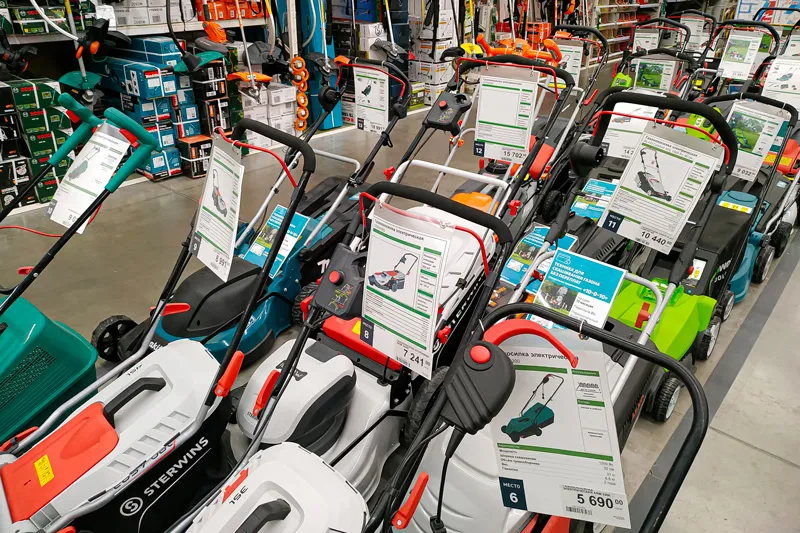
- In-store, I need to quickly create attractive POS or in-store communication materials, aligned with my brand guidelines (without relying on an external provider or a long validation cycle).
- As a sales representative, I want to attach personalized product sheets to my quote, tailored to the color or configuration selected by my client.
- Or I need to quickly respond to a tender and produce consistent sales documents without starting from scratch every time.
- As part of the marketing team, I must provide field teams with always up-to-date sales materials, without being asked for every local adaptation.
- I need to produce labels in different formats, for a single product or for a full in-store display.
- And why not go further with a personalized parcel insert, extending the customer experience right to their home?
In every case, the goal is the same: to have professional sales materials without depending on a designer or marketing team for every request.
The key challenge: reliable, well-structured product data
Anyone who wants to automate the production of high-quality sales materials must start with the foundation: data.
The more complete, structured , and enriched with usable visuals your product information is, the further automation can go.
We are not just talking about generating a “basic” product sheet, but about producing:
- Contextualized promotional materials,
- Documents enhanced with marketing mechanics,
- Visually engaging materials.
A often underestimated virtuous effect: by using these tools, field teams become active contributors to data quality. When an error is identified, they can correct it, and those corrections can then be integrated into the reference database for the benefit of the entire organization.
Automating… without giving up the human touch
Automation does not mean rigidity.
In many cases, a final manual adjustment step remains relevant:
- Adding complementary information,
- Refining the sales message,
- Fine-tuning personalization for a strategic client.
With Simple Workspace web-to-print tools (designed to be — as the name suggests — easy to use), a salesperson can enrich their materials without desktop publishing skills, while still respecting brand guidelines.
The result: autonomy, speed, and professionalism.
The power of collaboration: sharing to move faster
Sales materials are never produced by just one person.
Sales teams, agencies, department managers, partners…
Sharing templates and productions allows you to:
- Inspire users,
- Spread best practices,
- And above all, save valuable time.
Centralizing templates through marketing ensures:
- Brand consistency,
- Compliance with graphic standards,
- Uniformity of materials across all channels.
Two specific cases illustrating J2S offerings
A dedicated offer for agencies and printers
To address the specific challenges of agencies and printers, J2S has developed an offer highlighting:
- Collaborative work,
- Review and approval processes,
- Smooth communication with end clients.
This approach optimizes print publishing workflows while strengthening quality and project traceability.
Integrate with existing systems… or introduce a new approach
Depending on the context, two scenarios emerge:
Enhancing an existing system
When the company already has a PIM, it naturally becomes the single source of truth.
All that is needed is to add a triggering mechanism to automatically generate the desired sales materials.
Providing a dedicated sales materials solution
Alternatively, Simple Workspace, through Simple MOM, can act as a lightweight product repository, enabling:
- Product selection,
- Template choice,
- Immediate document generation (PDF, Excel, etc.).
In another context, when the company already relies on a PIM such as Akeneo , it is also possible to leverage an integrated solution like Publishing Campaign . This solution enables the direct generation of product sheets and other sales materials from structured PIM data, without disrupting existing processes.
In both cases, the objective remains the same: simplify teams’ daily work while accelerating the production of sales materials.
The sky is the limit: sales materials designed for performance
The possibilities do not stop there:
- Connection to printing services to produce and deliver materials directly.
- Automatic generation of personalized sales catalogues, tailored to a client, industry, or project type.
- Creation of multilingual sales materials, without multiplying files or efforts.
- Generation of Excel files (price lists, comparisons) alongside PDFs.
- Automatic adaptation of sales materials by territory, network, or partner, while respecting brand guidelines.
- Automatic creation of social media visuals from the same product data.
- And more.
In short, an industrial logic serving commercial performance.
Sales materials are no longer just documents: they are drivers of sales performance.
They have become true sales enablers, provided they are:
- Consistent,
- Personalized,
- Delivered at the right time.
This is precisely where we support our clients.
Whatever your organization or level of maturity, we can help you structure and automate your sales materials.
Contact us to discuss your needs.
FAQ – Automated generation of sales materials
What is automated generation of sales materials?
Automated generation of sales materials consists in automatically producing sales documents (product sheets, POS materials, labels, catalogs, tender documents, etc.) from centralized and structured product data, while respecting the company’s brand guidelines.
What types of sales materials can be automated?
Many sales materials can be automatically generated:
- Personalized product sheets
- POS / in-store materials
- Labels
- Sales catalogs
- Tender documents
- Price lists (Excel)
- Multilingual materials
- Website and social media visuals
Why automate the production of sales materials?
Automating sales materials allows you to:
- Reduce manual tasks
- Save time for field teams
- Ensure brand consistency
- Quickly produce personalized documents
- Secure the data used
Do you need a PIM to automate sales materials?
No. Best case scenario, a PIM exists and serves as the data source. Otherwise, the solution can centralize information and enable immediate generation of sales materials.
Does automation limit personalization?
No. Automation structures production while still allowing adjustments: adding editorial information, personalizing the message, adapting to a specific client or context.
What are the benefits for field teams?
Field teams gain autonomy:
- Quickly create professional materials
- Automatically comply with brand guidelines
- Reduce dependence on marketing or designers
- Respond more effectively to sales opportunities
How can you ensure large-scale consistency of sales materials?
Centralizing templates and graphic rules through marketing ensures consistency of sales materials, while still allowing teams to adapt them locally.

JY. Jourdain
Cofounder of J2S